
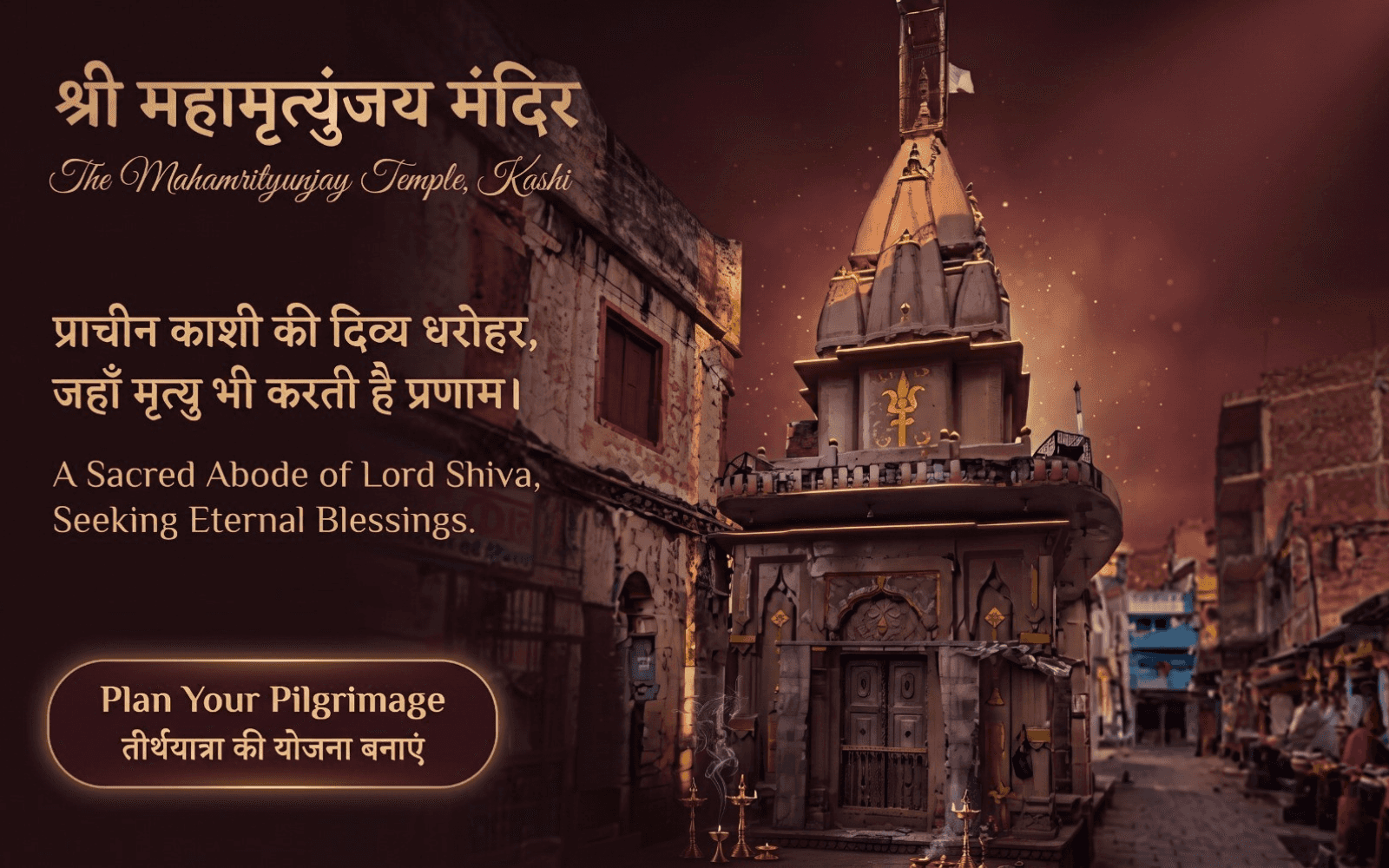
Mrityunjay Mahadev Mandir
The temple follows traditional North Indian temple architecture, built using soapstone, granite, and sandstone. The sanctum houses the ancient Shivling, surrounded by a quiet stone courtyard with carved pillars — an unassuming setting that belies the depth of its scriptural significance.
History & significance
A short walk north of Kashi Vishwanath, past the Kal Bhairav temple, down a lane in Daranagar, there is a temple that most visitors to Varanasi never find. Dedicated to Lord Shiva in his Mrityunjay form — the conqueror of death — this ancient shrine holds a significance in Kashi's spiritual landscape that far exceeds its modest, easy-to-miss setting. History of the Temple The ling here is called Mrityunjayeshwar. In the Kashi Khand — the section of the Skanda Purana in which Mahadev himself walks through Kashi, naming its sacred sites — this ling is given a second name: Apa Mrityu Hareshwar, "the Lord who removes untimely death." The scripture places it in the vicinity of Kaleshwar, and states plainly that it keeps untimely death away from those who worship there. While the smaller shrines within the temple complex are believed to be thousands of years old, the present structure was constructed in the 18th century. The Shivling within the sanctum is regarded by devotees as swayambhu (self-manifested).
Devotees traditionally offer bilva (bel) leaves, milk, and water to Lord Mrityunjay, and recite the Mahamrityunjaya Mantra — especially on Mondays and during the holy month of Shravan. In keeping with the temple's Puranic naming as Apa Mrityu Hareshwar, worship here is specifically associated with protection from untimely death, recovery from illness, and long life.
